
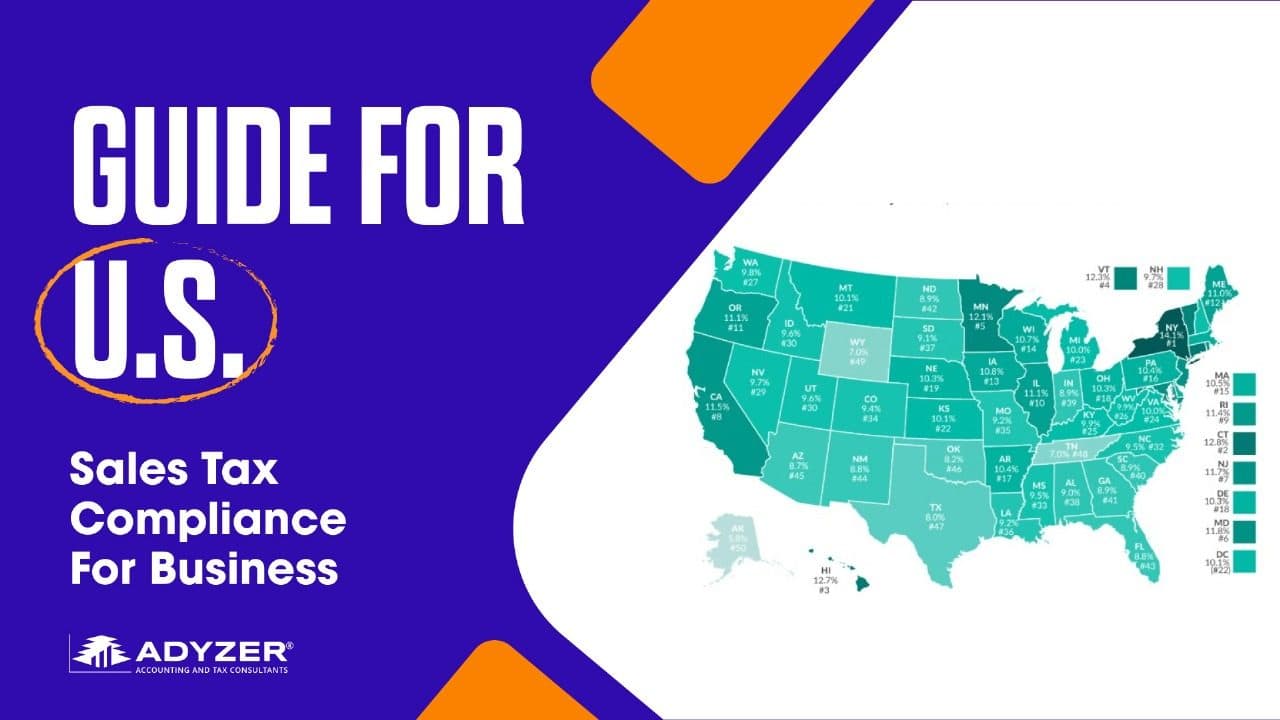
Sales tax in the United States is unlike anywhere else in the world. Instead of a single federal tax, 45 states and the District of Columbia levy a statewide sales tax, and thousands of local jurisdictions add their own rules, rates, and filing requirements. For businesses — especially in eCommerce, SaaS, retail, and services — this creates a compliance challenge that can quickly lead to penalties, back taxes, and audits. At ADYZER, we help businesses simplify sales tax compliance across every state where they sell.
Understanding U.S. sales tax obligations
1. Economic nexus rules
The South Dakota v. Wayfair (2018) decision changed everything. Businesses now owe sales tax even without a physical presence if they exceed certain thresholds in a state. A few examples:
| State | Economic nexus threshold |
|---|---|
| California | $500,000 in annual sales |
| New York | More than $500,000 in sales and more than 100 transactions |
| Texas | $500,000 in sales |
| Florida | $100,000 in sales |
Each state has its own threshold, meaning your compliance footprint expands as your business grows.
2. Physical nexus rules
Even before Wayfair, states required sales tax if you had employees, warehouses, offices, or even a trade show presence.
3. Marketplace facilitator laws
If you sell on Amazon, Walmart, Etsy, or similar marketplaces, those platforms may collect and remit sales tax on your behalf — but you may still be required to register or file in certain states.
Common challenges businesses face
- Multi-state registrations — a small eCommerce business may need to register in 10+ states.
- Product classification errors — food, clothing, SaaS, and digital goods all have varying rules by state.
- Exemption certificates — mishandled resale or nonprofit exemptions are audit red flags.
- Filing frequency — states require monthly, quarterly, or annual returns based on revenue.
- Local jurisdictions — cities and counties may impose additional rates beyond state requirements.
Filing deadlines & penalties
| Filer type | Typical deadline |
|---|---|
| Monthly filers | The 20th of the following month (varies by state) |
| Quarterly filers | Typically April, July, October and January |
| Annual filers | Often January 31 |
Penalties for non-compliance include:
- Failure to register — retroactive tax assessments.
- Late filing — commonly 5–10% penalties plus daily interest.
- Audit exposure — multi-year liability, and in some states personal liability for owners.
Sales tax audit risks
Sales tax audits are increasing nationwide. Common triggers include:
- A large jump in sales without tax remittance.
- Mismatched exemption certificate records.
- Expanding into new states without registration.
- Incorrect tax rates applied to products or services.
ADYZER's sales tax compliance solutions
At ADYZER, we transform sales tax from a liability into a managed process. Our services include:
- Nexus studies — determine where you must collect sales tax.
- Registration management — state applications and compliance setup.
- Automated compliance tracking — integrated with QuickBooks, NetSuite, or your ERP.
- Filing & remittance — accurate, on-time submissions in every state where you're registered.
- Audit defense — representation during state audits.
- Multi-state expertise — covering all states plus local jurisdictions.
FAQs about U.S. sales tax
Do I need to collect sales tax in every state?
No, only in states where you meet economic or physical nexus thresholds.
What happens if I didn't collect sales tax in prior years?
States may pursue retroactive tax plus penalties. Voluntary disclosure agreements can reduce penalties.
Are digital services taxable?
Yes, in many states. SaaS, downloads, and subscriptions are taxable in states like New York and Texas.
Do Amazon or Shopify sellers still need to register?
Often, yes. Marketplace facilitators remit sales tax on marketplace sales, but you may still need to register and file returns — and sales through your own store are your responsibility.
Why choose ADYZER for sales tax?
- Expertise in multi-state compliance and eCommerce taxation.
- Automated systems for real-time tax tracking.
- Audit defense with state tax authorities.
Take action
Sales tax compliance doesn't have to be overwhelming. With ADYZER, you can expand into new states confidently while staying fully compliant. Contact us for sales tax compliance.